Sunday, April 23, 2006

Karma

The La Salle fiasco involving its fielding of ineligible players in the UAAP basketball games has finally been dealt with, as the UAAP board has decided with finality to suspend the school in all UAAP events for one year, for negligence. It was a unanimous decision, with two members even arguing for a longer suspension, two years (which I feel is more reasonable).

Predictably, La Salle sympathizers believe the suspension was just too harsh, and the penalty shouldn’t extend to non-basketball sports whose players and officials had no hand in the deceit. In addition, La Salle’s erstwhile rival, the Jesuit-run Ateneo de Manila, was likewise disheartened and would reportedly seek motivation elsewhere (what motivation?). It’s as if these two were the only schools that matter. Excuse me, but I really need to barf!

The main issue stemmed from the fake DECS documents two players of the basketball team presented for eligibility purposes. Meaning these two were not really bona fide La Salle students. They’re probably street bums picked up from some street corner, dressed up in green-and-white jerseys and told to shoot the ball.

What surprised me was that, had the DECS documents been found to be genuine, it still appears like it IS a school policy to admit “certain students” through some back door, in this case, using the DECS-administered exams in lieu of the standard entrance screening tests, to bring in prospective students with special abilities.

Why can’t they just field players from their pool of legitimately-registered students, just like everybody else?

Well, then La Salle wouldn’t have won that many championships if it relied too much on its bar-hopping and trigger-happy students with their yayas and drivers in tow, wouldn’t it?

The cute rivalry between Ateneo and La Salle does bring in the crowds and the sponsors for the UAAP events, to the point that they take themselves too seriously. You know, like that brawl between some students after a tense match at the Araneta a few years back. I mean, for crying out loud, it’s just a game! Do you really need to bash each other’s heads to make known your loyalty to your alma mater? I’m sure Oprah wouldn’t have approved.

And so, the quest for glory pressured La Salle to cheat.

I do not, for a single moment, believe these two erring players concocted this elaborate plan on their own, as some quarters would have the public believe. They couldn’t even possibly pass the entrance exams!

How about school officials feigning ignorance about the whole thing? Oh please. The school registrar endorsed the fake documents, right?

Well, perhaps La Salle hired the registrar straight from his “other” job signing all those fake Diplomas sold along Recto and Quiapo.

Saturday, April 22, 2006

SCHUMANN: Piano Concerto in A Minor


Robert Schumann: Piano Concerto in A Minor
Justus Frantz, Piano
Leonard Bernstein (conductor), Vienna Philharmonic


Robert Schumann represents the best of musical romanticism. Along with other important composers such as Chopin and Liszt, he defined the music of the Romantic period. His music is filled with a superabundance of feeling, imbued with a sensibility that is poetic, which has never been encountered previously. Whereas Beethoven before him preoccupied himself with grandiose heroic and profound life-and-death themes, the Romantics substituted that with individualistic and intesely emotional themes. The melodies are clearly defined, treated with extraordinary passion, delicacy and never-heard-of-before virtuosity. Along with Schumann, the compositions of Brahms easily come to mind, exploited to overblown proportions, however, by Rachmaninoff.

Schumann’s personal life was one of tragedy. He sired eight children with Clara Wieck (the pre-eminent pianist of her time), four of whom died; his wife was known to have had an affair with Johannes Brahms, Robert’s friend and mentor in many ways; and that in the end, he lost his mind, became suicidal and eventually spent the last years of his life in an asylum.

If he were Beethoven and Mozart, his music might have reflected the shift in his personal outlook and views. Both composers’ music became increasingly complex and personal towards the end of their lives, became darker and indeed, spiritual (Beethoven’s Misa Solemnis, the late quartets, the Choral Symphony and Mozart’s later concertos and the unfinished Requiem mass are clear examples).

Schumann’s work, however, seems to date back to a happier period, at the height of his powers. His only piano concerto in A Minor is a perfect example, interpreted here by Justus Frantz and the Vienna Philharmonic under Leonard Bernstein.

Schumann appears to be more comfortable with the piano rather than with the orchestra. His orchestration sounds rather dry, sparse and uneven, compared to his piano writing, which is brilliant. His symphonic works are somewhat uniform in style, they all sound similar although his melodic ideas that we have come to love remains solidly intact. His piano works, however, are among the most complex in the repertoire. His mode of expression is so refined, down to the slightest difference in shading in the sound. Not surprisingly, his best orchestral work is his lone Piano Concerto, rather than his Symphonies.

This concerto is probably the best ever composed for the instrument. The wonderful melodic ideas, the rhythmic vitality, the clarity of the layout of the movements, and the marvelous piano writing have made it a standard fare among the world’s best pianists.

The first movement opens with a fiery outburst from the piano, answered and sustained by a delicate theme throughout by the woodwinds. The luxuriant tone and the knightly motif lead to the gracious and gentle intermezzo of the second movement, with the cellos providing the main theme and dreamily ornamented by the piano. Immediately after, the piano breaks into the powerful last movement, with the soloist displaying even more technical virtuosity and brilliance, and leads the work to its electrifying and truly breathtaking close.

I think Frantz missed some bars in the last movement, but most people won’t notice it anyway. Bernstein’s orchestra was surprisingly dynamic, despite its clearly supporting role.

Along with Chopin’s E Minor Concerto, this is my favorite Piano Concerto, ever since I first heard of it over that born-again FM station, 98.7 DZFE, “The Master’s Touch”. I listen to it when unwinding or simply relaxing. Highly recommended.

Tuesday, April 18, 2006

Paddling One Morning


I went dragon boating this morning, dragging myself out of bed at 4 a.m. to catch the 5 a.m. call time. Having been inactive for almost half a year, I decided it was high time for me to train again and regain my place in the team.

Dragon boating isn’t something that one may instantly like. For one, waking up at the crack of dawn only to find yourself paddling in the murky waters of Manila Bay doesn’t seem like a good idea to start your day. Fact is, you may have to subordinate some of your priorities if you want to focus on the training. You know, like giving up Friday night socials and rescheduling sex.

Oh yes, you give up these things in exchange for blisters on your butt and fingers and muscle pains on your back and shoulders. And then you cram yourself in the lone restroom within a ten-mile radius along with a hundred or so people for a quick wash (there’s no shower, you make do with garden hose).

The benefits are mostly abstract. Like an expanded social life. But you start to have profound and scintillating conversations.

I arrived 5 minutes past the call time and Frodo was already there.

Frodo Baggins: “Oh wow, is this for real? Showing up only because you want to tour China, don’t you?”

Frodo, that’s a rhetorical question.

Me: “Then you’re going to compete in Boracay?

Frodo: “My family will start disowning me if I do that”

While paddling, we idly passed some fisherman catching fish with some spear and what appears to be a net bag.

The discussion continues and becomes more thought-provoking:

Me: “Where’d he put his catch? He doesn’t have a cooler or an ice bucket!”

Frodo: “Let’s ask him”.

Helga: “Prepare for power long, NOWW!”

At this point, I overreached my right arm and hit Frodo’s right shoulder, leaving a red mark.

Frodo: “What the…”

Later, Rambo the pacer gets transferred from the front to my back. And promptly hit my right shoulder with his arms, leaving scratch marks.

Rambo: “Oops, my fault”.

I was about to say something, but realized that Rambo’s large frame and swarthy figure means he must have seen combat in Vietnam in the 70’s.

Me: “Oh, It’s OK”.

In the restroom-cum-shower room, Bart Simpson gets fascinated by my “erect” nipples and keeps on pinching it. I swear to God I’m not aroused. That’s just how it looks, dammit.

Me, flinching: “You’re an asshole!”

Bart merely replied with a hearty laugh, grinning like a tasmanian devil.

Saturday, April 15, 2006

Promdi Memories


Reminiscences of a Country Bumpkin

I haven’t had the chance to visit my old hometown for quite a long time now. I grew up in Camp Phillips, a housing camp for Del Monte employees in Bukidnon, site of the largest pineapple plantation in the world. My parents have now retired and resettled back in Bohol. However, I feel a stronger affinity with Bukidnon rather than with Bohol, despite the latter’s many charms, because that was where I spent my childhood.

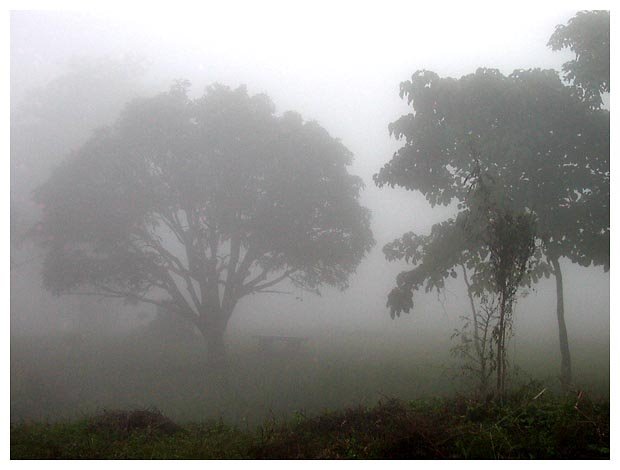
Camp Phillips is a beautiful place, situated 2,200 ft above sea level in the plateaus of Bukidnon, a landlocked province flanked by gentle rolling hills and the mighty Mt. Kitanglad hovering like a sentinel. Upon entering the place and getting past the Welcome sign, the cool, fresh mountain breeze as well as the wonderful scent of pine never fails to greet you. The entire place gets enveloped by fog during chilly December early mornings and late afternoons. Grrrr. Cold. But it sure felt wonderful, a welcome relief from the heat and filth of Manila. Funny but I seemed to have taken these things for granted. I only realized this when I spent so many years in the city. You see, the urban blight, pollution and ugliness that I see everyday makes for a depressing sight. There’s just no comparison.

Designed like an American suburb, the place features bungalow-type houses evenly spaced and laid out, complete with manicured front lawns decked with bougainvillas and orchids, and back yards, where bamboos and banana trees take their places. Right in the middle is the huge plaza, green-carpeted with grass, so huge it accommodates the full-size football and baseball fields where as kids, we’d play softball with tennis balls and a dos-por-dos for a bat, do cartwheels, run and flail around in the rain after school, as well as the children’s playground, where I usually stopped to swing standing up and climb the chimney bars on my way to pick up the daily fresh milk bottles.

A clump of old santol and breadfruit trees provides a break to the wide open spaces while mahogany, eucalyptus and pine trees surround the verdant plaza. No wonder visitors from the city usually have their picnics here. The two schools and the large parish church, with the tolling bells that reached far and wide, which reminded us to observe the Angelus everyday, complete the idyllic picture of a laid-back, provincial image.

I went to school here, at the Our Lady of Lourdes for grade school, where wearing slippers with socks on when inside the classroom remains a policy, to keep the floor Johnson-wax shiny. I loved that school. We had plenty of English grammar drills (we had two English subjects!) declamation contests and plays. In fact, I can still recite Longfellow’s Sands of Time from memory. The other school, Plantation Elementary, was a public school. The kids always brought bolos and knives for gardening. I thought it was a preparatory school for would-be farmers.

It was a really hilarious time growing up. One kid A.P. came from a barrio in the outskirts. Unfortunately, he was always the subject of rumors of the “other world” kind. One time, nobody wanted to go near him, because his mother was rumored to be a practicing witch, ergo, if he tapped our shoulders, we were supposed to tap him right back, so that we will not become witches ourselves; rubbing ourselves with garlic was out of the question-our teachers would simply drive us out of school (Gasy explained this to us in great detail). Only Ambrose, the most religious (we all thought he’d make a fine priest-he wore the rosary around his neck) was the only one safe enough to approach him, for obvious reasons. I also wore a medallion given to my father by our Italian Jesuit parish priest and blessed by the Pope. My friends were not impressed. I wasn’t religious enough.

I went to high school here as well, Holy Cross High, run by nuns. I remember clearly my freshman Social Studies teacher scaring the hell out of us with personal accounts of ghost stories about White Ladies she saw while opening the jalousie window of her bedroom, and the mythical sigbin (demonic dogs that feed on babies). She’d frighten us further by confirming that at night, cries can be heard coming from the biology laboratory, which has a preserved fetus contained in a large jar. Since the town cemetery was a whisper away from where she lived, we believed her. In fact, years before, the fetus was rumored to have spoken to a few students and expressed her desire to be buried. Imagine that! It didn’t help that my own mom, a former teacher here, had her own stories to tell. Kids avoided passing near the school at night, if not then we’d run as fast as we possibly can.

There was also a small valley that separated our section of the neighborhood with the rest, connected only by a wide bridge. Passing this place at night alone can be traumatic, as it is eerily quiet and sounds of croaking frogs from the brook beneath can only be disconcerting. It didn’t help that upon approaching the top of the road, there was a huge mango tree. It was widely believed a hideous-looking Agta (I imagined him to be a cross between King Kong and Godzilla) would be sitting smoking a cigar in the branches. I used to pedal my bike at top speed when passing this place. One time, however, while going up the road, my cousin Paton was likewise heading down the opposite direction on his bike. We were both in a hurry to get past this place. In trying to avoid each other, we managed to crash into the deep canal nearby.

The camp’s social life revolved around the social hall. We didn’t get to watch movies that were shown in the city. Other than the 1950s or 60s black-and-white cowboy movies shown for free by the American soldiers stationed near Camp Phillips, the movies shown every Sunday afternoon were awful Tagalog and Kung fu rejects from theaters in Cagayan de Oro. And thus, a fund raising event for a beauty pageant candidate (winners were determined by the amount the contestants were able to raise) featuring a Hollywood (yehey, finally!) movie became very well-attended. All the kids were there and were bubbling with excitement. We had no idea what the movie was about before the screening. It didn’t matter. The title? The Exorcist!

We were all shocked and sprinted home after the screening. Linda Blair’s face turning around a full 180 degrees was a nightmare.

We didn’t sleep well that night.

Friday, April 14, 2006

The Write Stuff: Free-lancing Full-time

Fabulous wealth- large investment portfolios, huge bank deposits, nice car, job security- none of these will likely be yours if you want to be a full-time free-lance researcher.

You may, however, find yourself devoting more time to creative pursuits: practice Bach on the piano, join a dragon boat team, flesh out a short story, bake a flour-less chocolate cake, learn a foreign language, or write this blog (?), and you need not starve, beg for alms and be a burden to your parents and society, either. Not to mention the obvious benefits: no traffic, no Monday morning blues, no bosses. It’s not entirely a bad deal, really- just be sure that your love for, say, the arts and sports runs deeper than your pockets.

I never planned to strike out on my own. It fell on my lap. I was not particularly happy with the non-profit group I was working with, engaging ex-communists who remained hard-core adherents to Marx and Mao to debates on economic issues. It became a fruit-less and thankless exercise. An opportunity to work for a bank in the Middle East came and I promptly left (anything is better than dealing with narrow-minded “intellectuals” of a bankrupt ideology), only to find that my undergraduate status then made me ineligible for the overseas position.

After the customary what-am-I-gonna-do introspection and studying my options which included becoming a rice-and-coconut farmer in Bohol, I sent e-mail proposals to a hundred or so companies locally and abroad, to as far away as Spain and Germany. Yeah, I’m guilty of spamming! (Attention: Yahoo!) In fact, only around 10 replied, 2 were really interested and only 1 proceeded to give me a project, which remains a client to this day. My first employer also got on-board, and other jobs like feasibility studies and market searches followed as well.

Free-lancing, as I have come to embrace it, is a dicey business. It can be very frustrating. Many clients make impossible demands. Others expect you to be like a detective or a private investigator. And you never know when you’re going to get paid. In the meantime, you have to come up with something to pay the bills and the rent.

It could get pretty lonely at times, too. When all your friends are busy at work, the TV and the Internet become your best friends. Just be sure you don’t start talking to the wall.

I have learned to adapt to this lifestyle but I also realize I might step out of this “comfort zone” maybe sooner than I originally expected (but that’s another blog). Whatever turns out, free lancing has been good to me: although it won’t ever make me rich, I’m not stressed out, I live like a retiree, I do not sell my soul to the devil and compromise my principles, and I ponder the fate of the universe, like Superman (kidding!). No, seriously.

Thursday, April 13, 2006

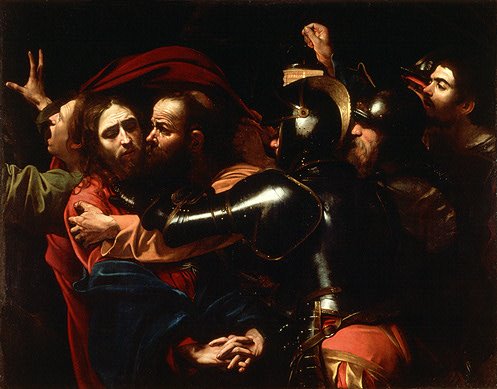
Sinner or Saint: The Judas Gospel


I watched the replay of the National Geographic feature on the Gospel of Judas Wednesday night since I failed to catch it when it first aired on Palm Sunday. My row mate, Mike essentially summarized the narrative to me after practice, which was about Christ fixing the betrayal scene between Him and Judas, to allow for the Crucifixion, and thus the Salvation of humanity, to be completed.

When I first heard of it, my initial reaction was one of disbelief, “What? Judas has a gospel, I thought he hanged himself from a tree after betraying Christ?” (I paid attention during Religion/Catechism classes). Immediately, my skeptic alter-ego took over and promptly shifted to the sarcastic mode, “Maybe he took out his notebook and wrote down the sequence of events, buried it someplace before tightening the rope around his neck and finally calling it quits”.

It turns out my instincts weren’t far from the truth. The Judas gospel “unearthed” in 1978 in Egypt, turned out to be a 3rd-4th century Coptic translation of the Greek original, which was denounced by the early Church Fathers, particularly Ireneus, bishop of Lyon around 180 A.D. as heretical. (The other so-called Gnostic gospels of Mary Magdalene, Phillip, Thomas and so forth used extensively in Dan Brown’s thrillers and that lamentable movie Stigmata, also came from this period). Coptic was the language in Egypt from A.D. 200 to 1000 and was the language of an emerging sect known as Gnosticism, which has its roots in paganism (Ireneus, c.a. 130-200 A.D., was the first to inform us of the sect who called themselves the Cainites, or followers of Cain, now known as the Gnostics, who claimed to possess the Judas gospel). Essentially, it borrowed elements from the emerging Christian Church and retold the story of the events leading to the Crucifixion basically to fit neatly with its view of the world.

From the NG feature, various experts theorized that Ireneus was pressured to choose from over 30 existing Gospels circulating then because the period saw intense persecution of Christians by the Roman authorities. He saw to it that persecuted believers knew what and why they were being made to suffer for, and thus, selected the accounts that would best represent the teachings of the emerging but marginalized orthodox church. He basically laid down and consolidated what constituted the teachings of Christ from the four accounts of Mark, Matthew, Luke and John.

The feature suggests that Ireneus was under intense pressure, not only because of the persecutions but competition from the Gnostics too, who were incorporating elements of Christian belief into their practices as well. The big question now is, Who was Ireneus? What authority did he have in order to choose which among the existing gospels should and should not be included in what we now know of as the Bible?

If NG only investigated further, perhaps interviewing experts of early Church history from the Vatican, they would find out that Ireneus was a disciple of John the Apostle. Which means he was in the best position, probably among the best qualified, to validate which of the competing accounts of the 30 or so gospels were consistent with Christ’s teachings as the apostles knew them.

The four Gospels were the earliest written accounts and appear chronologically in the New Testament. Mark was written around 60 A.D while the latest, John was believed to have been written in or around 100 A.D. In other words, there still existed first-hand witnesses (the apostles) or credible sources (direct disciples of the apostles) from which to verify and authenticate the various competing accounts. Judas Gospel only came to be noticed in 180 A.D., which means it must have been written much later than the first four.

The contents of Judas ran counter to the spirit of the first four. Christ arranging the betrayal so that it would free his spirit from the body was essentially a Gnostic belief. Gnostics believed that the God of the Spirit World was not the same God who created the Material World, and that it was the aim of everyone to free himself of the body that contains the spirit and join the Spirit God.

In addition, the account painted a sympathetic, even a heroic, picture of Judas, unlike the harsh and dark depictions especially from John. According to the account, Judas was the only one who totally understood Jesus, and that he was personally picked by Jesus to carry out the betrayal because of this. Then why hang yourself if you very well knew beforehand that the crucifixion and death of Jesus was basically fixed? True enough, the account ended abruptly and did not narrate the crucifixion and resurrection scenes. After all, it was not necessary anymore, the death of Christ would have sufficed and released his spirit.

The hype of the NG feature certainly did not live up to expectations. It certainly won’t shake the foundations of Christianity as was widely touted. The gospel of Judas was obviously not a first-person account (he hanged himself, didn’t he?) but a retelling of the events as the Gnostics saw them. (The four gospel authors are believed not really to have personally written the accounts themselves: it was a community effort. The four apostles and their respective disciples undertook the writing of the accounts and ascribed the authorship to the four, ostensibly because they were the direct witnesses to Christ’s teachings). It’s like the latest Ann Rice novel (I forgot the title) which retells the story of Jesus growing up in Nazareth, complete with first person dialogues and narratives, as she imagined it to be.

It would have been more interesting if in fact, there were evidences of Gnostics being followers of Jesus or the apostles, which means first-hand accounts of the events leading to the Crucifixion. This I believe would really shake the foundations of Christianity and subject the existing four accepted gospels to open question.

The woman archaeologist (I think that was what she was) who brought this account to light, at the beginning of the feature waxed emotional, declaring that its as if Judas himself chose her to undertake this monumental task of clearing up his name, which has been cursed down the ages.

Unfortunately, after the two-hour feature, I remain unconvinced.

Wednesday, April 12, 2006

My Stage Career

My folk dancing career started and ended in grade school in Bukidnon. Actually, I was drafted into it, like most of my classmates, because it was graded! The school principal had this idea of turning the school into a cultural showcase. She hired a gay choreographer from the city to train selected students, yes all kids, every weekend and after school to perform a variety of folk dances. We were then supposed to travel all over the housing camps and even outside, to perform for our families and relatives.

My homeroom teacher included me to be part of Lanceros de Negros. The boys were dressed like the sugar barons of the turn-of-the-century Negros, wearing immaculate off-white barongs with frilly laces typical of a Spanish land lord of the period (I felt so important then), while the girls donned Maria Clara gowns with skirts so wide and big, I thought it could house a poor family underneath. (Actually, we had our costumes tailored from fabrics meant for table cloths and curtains).

The school didn’t employ a make-up artist. The girls had their make-up and hair done at home. They looked decent. The boys, however, were like creatures from another planet. Our teachers simply took us aside, put some blood-red lipstick into their fingers and slapped these into our lips and cheeks, so that we won’t look like cadavers, they explained. I thought we looked like clowns.

The dance steps and movements were rather French. I mean, it’s really a rip-off of the gavotte: lots of stiff formal bows and three-quarter turns. It was like a waltz, only in Spanish-inspired costumes. It was fairly easy.

The others were not so fortunate. The tribal and Muslim dances were especially difficult and frightening. You see, one number featured girls performing a balancing act: half-kneeling on single bamboo supported atop the shoulders of two big boys on opposite ends, which always made the audience gasp and the parents squirm in their seats. The girls did fall to the floor a couple of times.

Others had to balance clay pots or lighted candles on their heads, or worse, dress like chickens. The latter was supposed to imitate a cockfighting match. Unfortunately, they appeared more like mad gorillas goring and knocking out each other.

When I stepped into high school, the head nun at our school entertained illusions of Broadway proportions: she put up a musical- Ali Baba and the Forty Thieves. She initially wanted to let me play the piano accompaniment. When she found out I was not up to it, she hired a professional.

Our costumes were again made from curtain material. Our teacher was the choreographer and you could tell it was her first time. The sets were almost non-existent. The jars where the thieves were supposed to hide were clearly made of supermarket cartons, painted brown. The singing was third-rate, the leading lady even had to sing lip sync, while the “better” singer was backstage doing the vocals. I think it was a big flop. It was one of those school presentations where the parents had no choice but to watch them lest their kids resent them.

This nun was really ambitious, she didn’t let the flop discourage her from mounting another musical extravaganza, this time a piano recital. My older brother and I got featured along with others, including a piano teacher. My brother played Ernesto Lecouna’s dazzling Spanish dance, the Malagueña, while I played Muzio Clementi's Sonatina in F provided by my sister in Silliman.

Together with the piano teacher who played the 1st movement to Beethoven’s Moonlight Sonata, we were the only ones who played classical. The others played popular melodies which were currently aired on the radio. One even had to bring her “imported” organ into the stage. I think my brother and I, who played the most difficult pieces, stole the show.

After that, I took up the banduria (lute) and played the national anthem during morning ceremonies, became the official organist during school masses and pianist for choral numbers on special events. I think I did well. The school gave me a special award during graduation rites.

The entire community seemed to think my family was like the von Trapp’s of the Sound of Music fame. You see, except for my mom, we became regular judges in amateur singing and choral contests, believe or not, even when we moved back to Bohol!

La Obra Maestra de Bellini

I Capuleti e i Montecchi (1830) Opera de Vincenzo Bellini (1801-1835)   Acabo de ver una ópera maravillosa a través de Youtube, una obra ma...